
Explore the World of Adornment
Enjoy Over Four Decades of Articles


This retrospective of the renowned Detroit-born, New York City-formed fashion designer Anna Sui at the Museum of Arts and Design is immersive, a kind of surround-sound (there is music) experience. In addition to a full-scale survey of Sui’s fashions, the show features numerous accessories, photos of celebrities like Kate Moss and Madonna (many taken by Steven Meisel) wearing her clothes, and cultural artifacts, including rock posters and Aubrey Beardsley prints, that provide historical/aesthetic context.
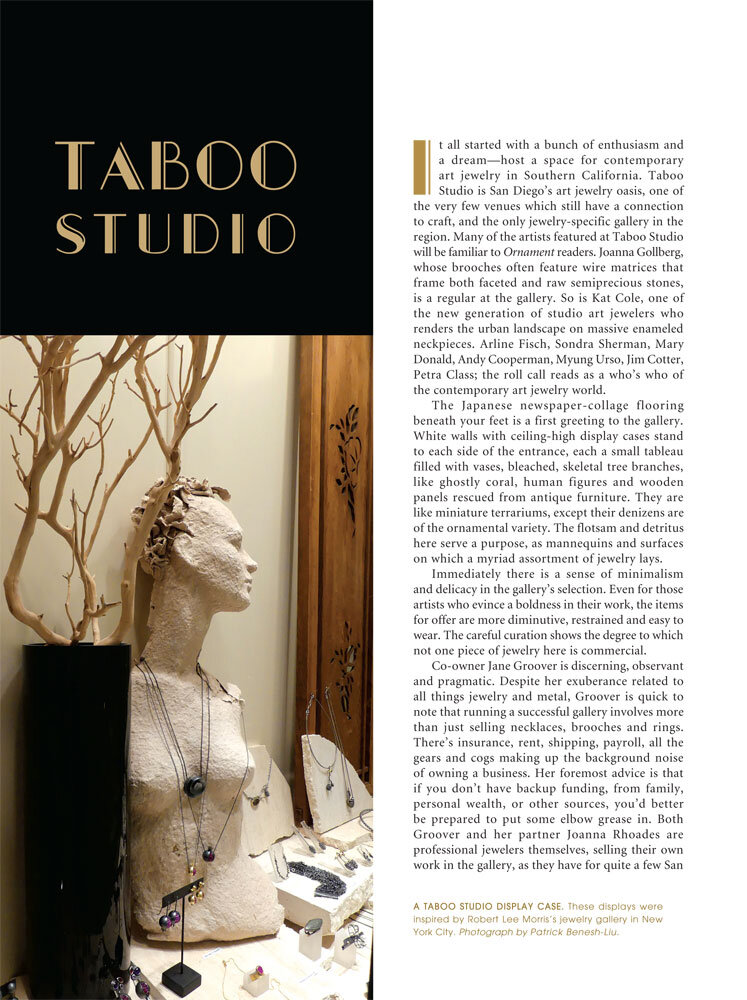
It all started with a bunch of enthusiasm and a dream—host a space for contemporary art jewelry in Southern California. Taboo Studio is San Diego’s art jewelry oasis, one of the very few venues which still have a connection to craft, and the only jewelry-specific gallery in the region.

Worn as protective amulets as well as for other ritual uses, glass beads were considered a valuable commodity and reused, restrung or made into something else: for example, the goat leather bracelets made from these beads that we sell. Their extraordinarily small size made it possible to make bracelets significantly narrower and more detailed than the more ordinary variety of larger-sized seed beads, common in Mali and other parts of Africa.

Margaret Zinser Hunt feels that art glass is a technically based medium, where the physics and chemistry of this craft both appeal to the scientifically inclined. Each piece of glass art is an experiment that takes hours. Solutions to problems in art glass do not come from the traditional liberal arts. During this period she started to make stylized butterflies, including Monarchs, an iconic symbol of the insect world and also a hallmark of the worldwide extinction of insects.
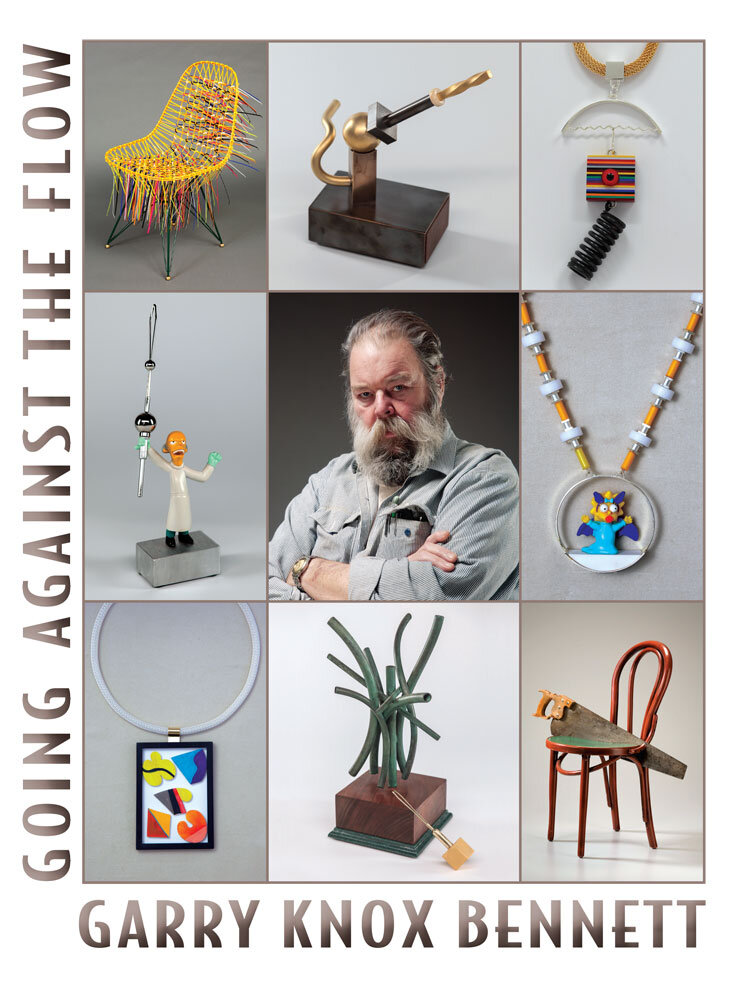
Glen R. Brown interviews Garry Knox Bennett, jeweler, furniture maker, painter, and sculptor, who makes his art in a very intuitive manner. (In)Famous in the craft community for putting a protruding spike in a piece of fine wood furniture, many would not know that his early career was as a successful manufacturer of roach clips. His jewelry, which makes extensive use of found objects and industrial materials, reflects his sense of composition, and great sense of humor.

Author Kimberly Chrisman-Campbell presents 365 garments, one for each day of the year, in her latest book Worn on This Day. She explains the how and why behind each piece of clothing and its significance—an example being the great athlete Jim Thorpe’s wearing mismatched track shoes when he won the 1912 Olympics. These insights, many from great moments in history, show how every piece of clothing has a tale to tell.
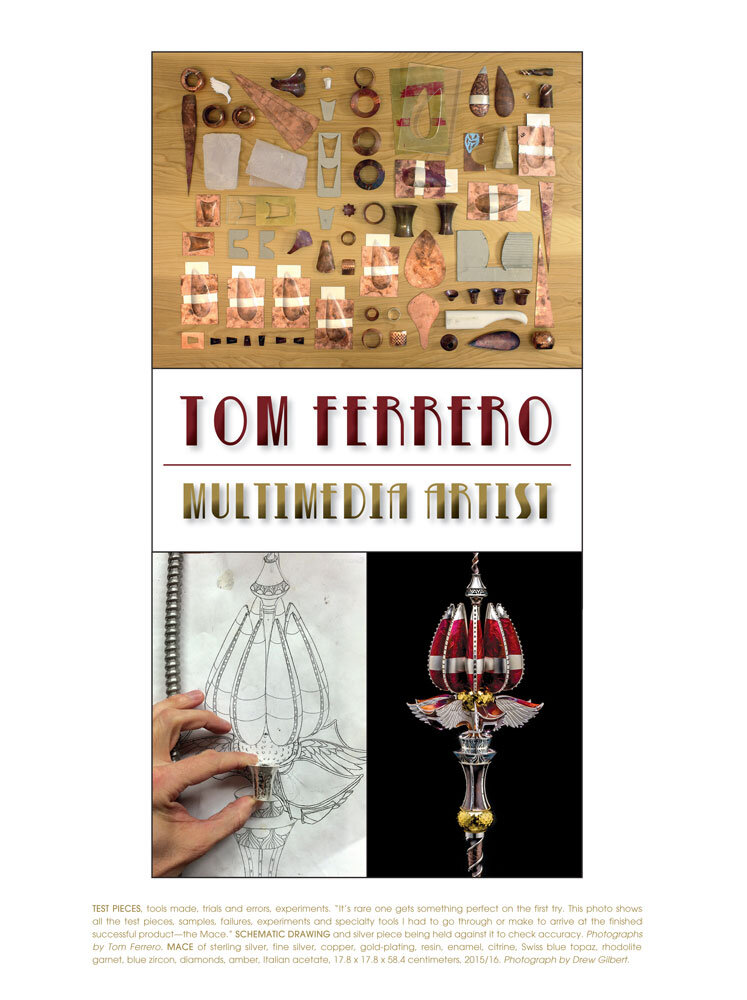
Carl Little chronicles the work of metalsmith, painter and teacher Tom Ferrero, a resident of Maine, whose metalwork is often characterized by a dazzling array of techniques, materials and complexity. Only in his thirties, Ferrero has already won prestigious prizes. Taking inspiration from a variety of sources, including science fiction, space exploration and nature, he has found his personal balance between teaching, metalsmithing and painting.

Dutch bead researcher and glass artist Floor Kaspers describes vividly in words and photographs the current production of glass beads in India, resulting from her extensive travels to Europe and Asia to study beadmaking around the world. The story of beadmaking in India involves the cross-pollination of influences from across the globe, including the former Czechoslovakia and Venice.

Carolyn L. E. Benesh describes the story behind the making of the Matilija Poppy Brooch, a collaborative effort of goldsmith Thomas Herman and enamelist Patsy Croft, along with six other jewelers, that took place at the Mendocino Art Center. Inspired by the Ada Brooch made by Marcus & Co., the finished piece was auctioned this year at Sotheby’s to benefit the art center.

Kimberly Chrisman-Campbell delightfully describes the Victoria and Albert Museum’s exhibition on British fashion revolutionary Mary Quant who changed how British women dressed in the 1960s after years of austerity following World War II. Known for bold colors and the miniskirt, Quant started her clothing line after being dissatisfied with what the market provided, and became one of Britain’s most showy entrepreneurs.
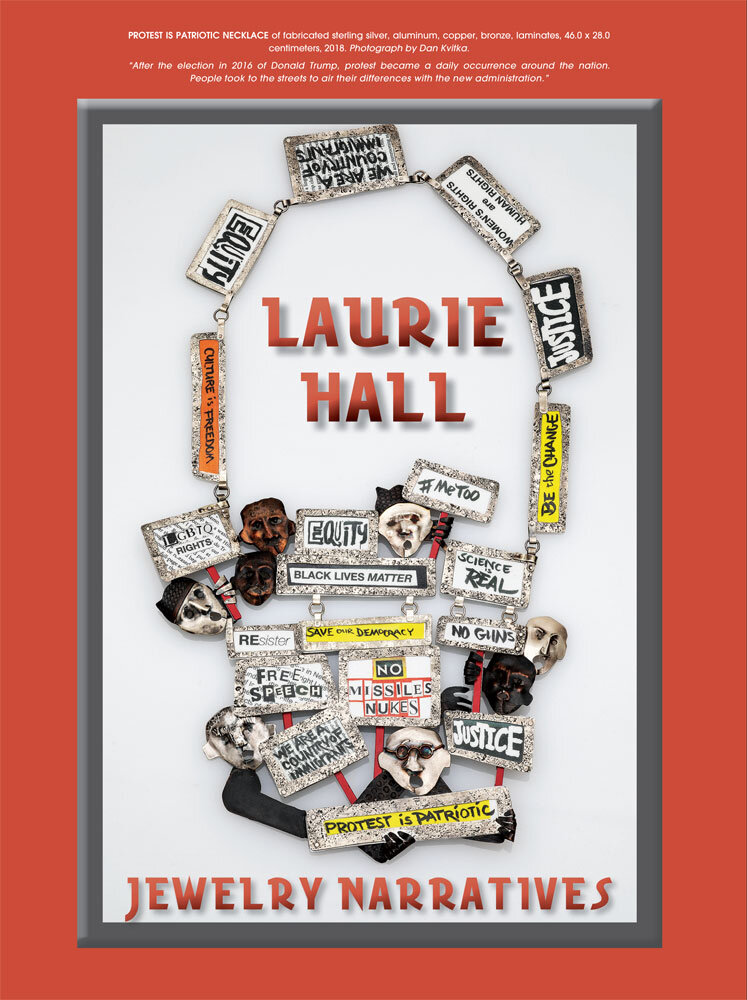
Robin Updike chronicles the career of Laurie Hall, a much-admired jeweler belonging to a unique group of Northwest artists influenced by the legendary Ramona Solberg. A career art teacher, who earned a master’s degree with Solberg, Hall’s work often contains political commentary, also strong in art jewelers from the Pacific Northwest.
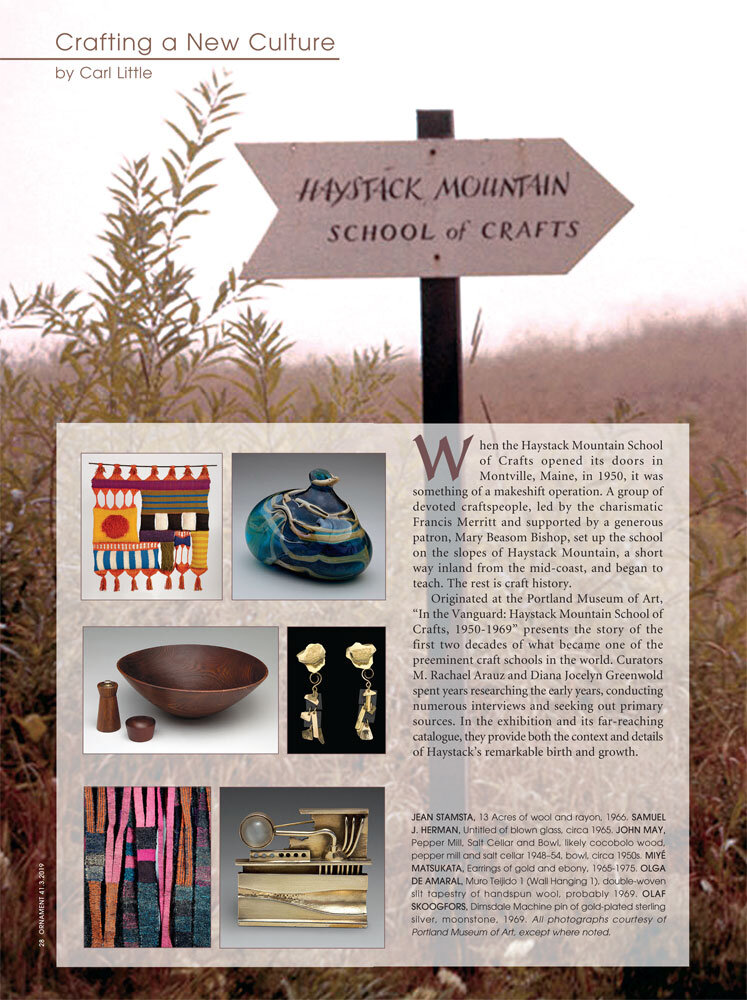
When the Haystack Mountain School of Crafts opened its doors in Montville, Maine, in 1950, it was something of a makeshift operation. A group of devoted craftspeople, led by the charismatic Francis Merritt and supported by a generous patron, Mary Beasom Bishop, set up the school on the slopes of Haystack Mountain, a short way inland from the mid-coast, and began to teach. The rest is craft history. Originated at the Portland Museum of Art, “In the Vanguard: Haystack Mountain School of Crafts, 1950-1969” presents the story of the first two decades of what became one of the preeminent craft schools in the world.
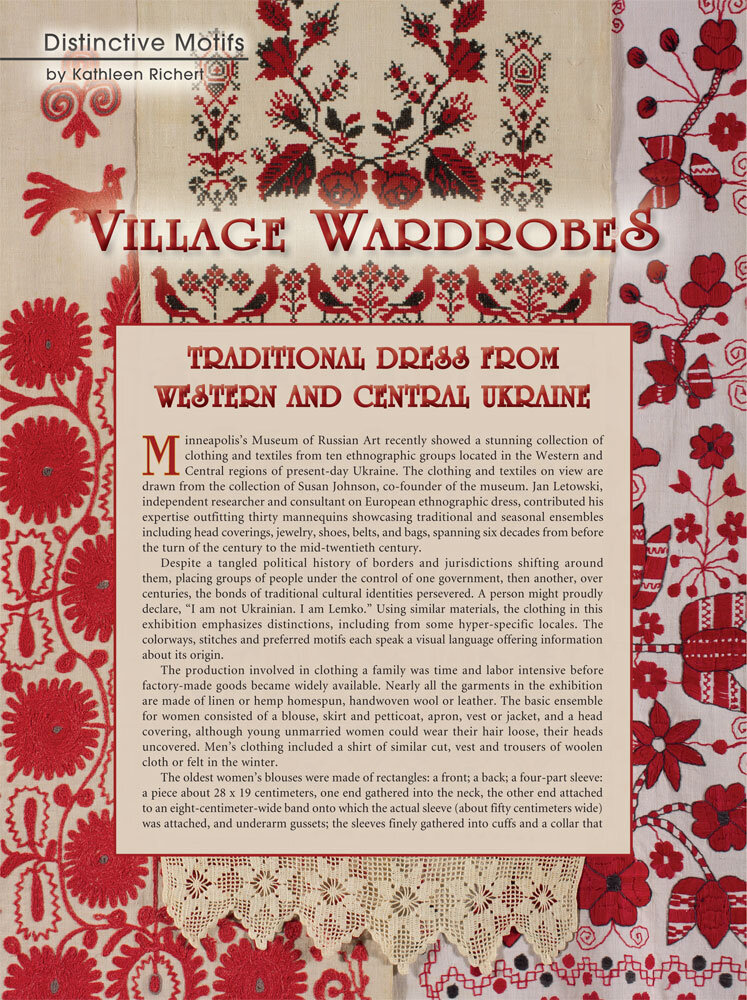
Minneapolis’s Museum of Russian Art recently showed a stunning collection of clothing and textiles from ten ethnographic groups located in the Western and Central regions of present-day Ukraine. The clothing and textiles on view are drawn from the collection of Susan Johnson, co-founder of the museum. Jan Letowski, independent researcher and consultant on European ethnographic dress, contributed his expertise outfitting thirty mannequins showcasing traditional and seasonal ensembles including head coverings, jewelry, shoes, belts, and bags, spanning six decades from before the turn of the century to the mid-twentieth century.

While Spondylus, a marine bivalve greatly valued in prehistoric times for its color, utility as a luxury ornament and ritualistic and religious significance, has been well-studied in Andean cultures, and to a lesser extent in Panamic or Isthmo-Colombian context, it is much less well known in Mesoamerica, especially on the West Coast of Mexico.

There is a certain weightiness in attending the Philadelphia Museum of Art Contemporary Craft Show which goes beyond its venue. While coziness and a red carpet entrance helps describe its comfortable space, this is one of those rare events where the focus is not the show itself, but the performers who inhabit it and breathe life into it.

In 1968, nine jewelers and metal artists met in the Windy City, where a conversation took place regarding a society that would serve the needs of metalsmiths. The following year, SNAG was founded. 2019 marks its fiftieth anniversary as an organization, and Chicago was chosen as a return to its spiritual birthplace. The Palmer House, a historic hotel built in 1875 featuring lush decor by Louis Comfort Tiffany, was its venue, a central location in the Chicago Loop both convenient and offering metaphorical associations, a coming full circle that was poetic and appropriate.

Ashley Callahan takes the reader on a deep dive into the art of African-print fashion. A European introduction that has been adopted wholesale by African seamstresses, fashion designers and both men and women, her retelling of the textile’s history, its rich language of symbolism, and its contemporary use lights up the imagination.

Diana Pardue describes the stunning lapidary designs of architecturally trained jeweler Richard Chavez, from San Felipe Pueblo. Minimalist yet monumental, Chavez’s jewelry utilizes bold and contrasting combinations of stones. He employs unusual specimens, such as black and green jade, to eloquently depict imagery both abstract and representational.

Kimberly Chrisman-Campbell takes us on a journey through the early twentieth-century effort to end the hunting of birds for fashion. As told by the New-York Historical Society’s recent exhibition, she details how the mass exploitation of wild birds for their plumage prompted an international movement to stop this practice. This coalition had many founders, among them the Audobon Society.

An exhibition at The Textile Museum at George Washington University demonstrated the importance of material gifts to a museum’s identity and mission, and how in resulting exhibitions they inform and educate the larger public. In 2015 Bea Roberts, a collector from California, gifted her 284-piece Chinese minority textile and ornament collection, from Guizhou Province in Southwest China, to the museum. On her trips to this mountainous, subtropical region, Roberts quickly learned just how evanescent cultural traditions were in our swiftly changing present-day.
(Notice: This article is a large download.)

Through some twelve hundred objects—more than half of which have never before been on display—this suite of three spacious, well-lit galleries chronicles no less than the emergence of human civilization across millennia, from the earliest villages and towns to increasingly complex urban settlements that paved the way for the modern metropolis.

Glen R. Brown interviews studio jeweler Linda MacNeil, who is inspired by historical art and is a collector of influences through observation. With a playful curiosity, an eye for assembling contrasting elements, and a flare for color, MacNeil’s careful, successive series in glass amount to a grand visual experiment.
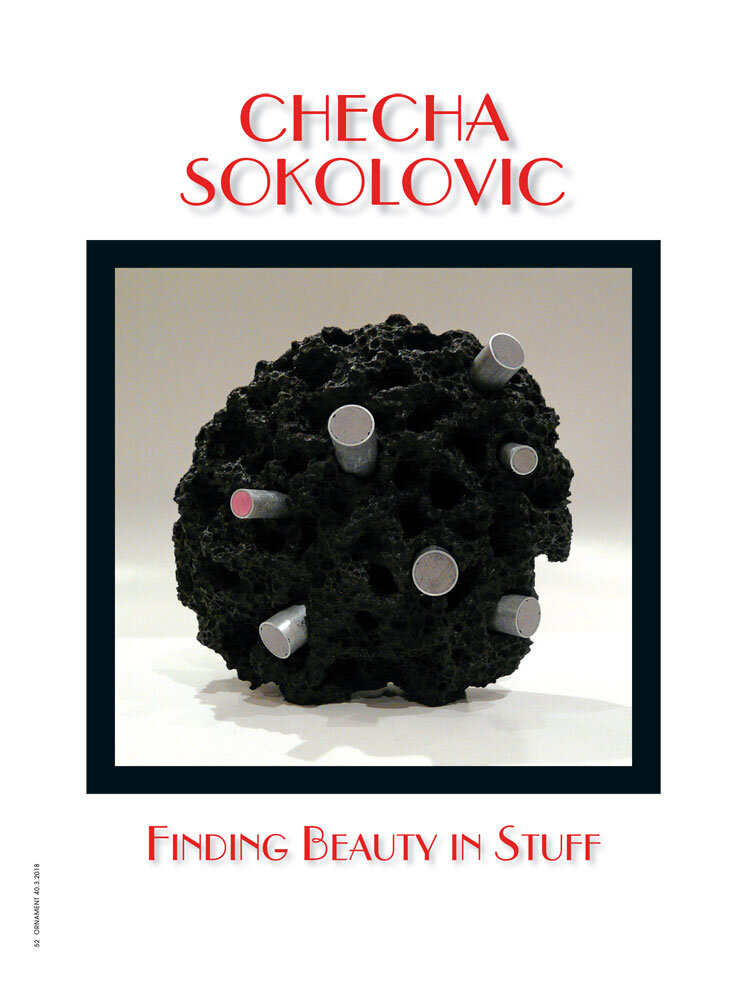
Robin Updike describes how architectural engineer Checha Sokolovic, who only started making jewelry in 2010, uses concrete, stainless steel and polyvinylchloride, as well as charcoal, fur and even egg cartons to create stunning ornaments with a great simplicity of style. She is one of the few to have worked with concrete in jewelry over the last four decades.

Robert K. Liu, with the help of the owners of Ethnic Embellishments, shows the ingenuity and craftsmanship of Tuareg smiths. Despite perhaps the most simple toolkit among North and West African jewelers, they demonstrate great skills in creating with a variety of materials.

Jill DeDominicis takes us into the heart of the craftspeople exhibiting in this year’s prestigious show. Each of the one hundred twenty participants is among the top in their media; by giving us the how and why of what they do, she enables the viewer with a greater perspective and deeper understanding.
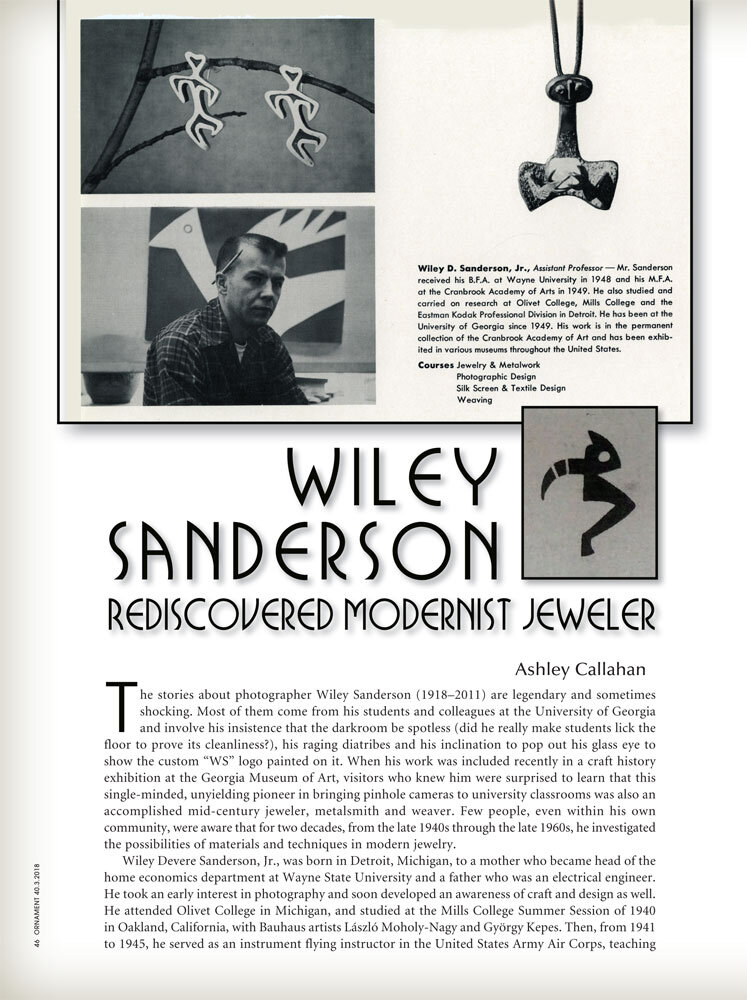
Ashley Callahan discovers the complex craft career of Wiley Sanderson, known primarily for his photography, especially with pinhole cameras. Less known is his work in pioneering jewelrymaking techniques, established during his tenure teaching jewelry at the University of Georgia, with an emphasis on centrifugal casting and the use of unorthodox materials.

Beads from Idar-Oberstein are easy to spot. Whether they are part of a Mauritanian headdress, prayer beads from Mecca or a strand from a West African market, they have a standard set of characteristics—striped dark brown, black or orange stones, cut in a variety of distinct shapes and made with great skill and precision. A German town of about thirty thousand people, Idar-Oberstein has been known throughout history as a place of stones, with local deposits of mostly low grade agate, jasper and other semiprecious stones. When it comes to bead history specifically, the town is almost synonymous with a wide array of agate beads that were traded to African and Arab countries.
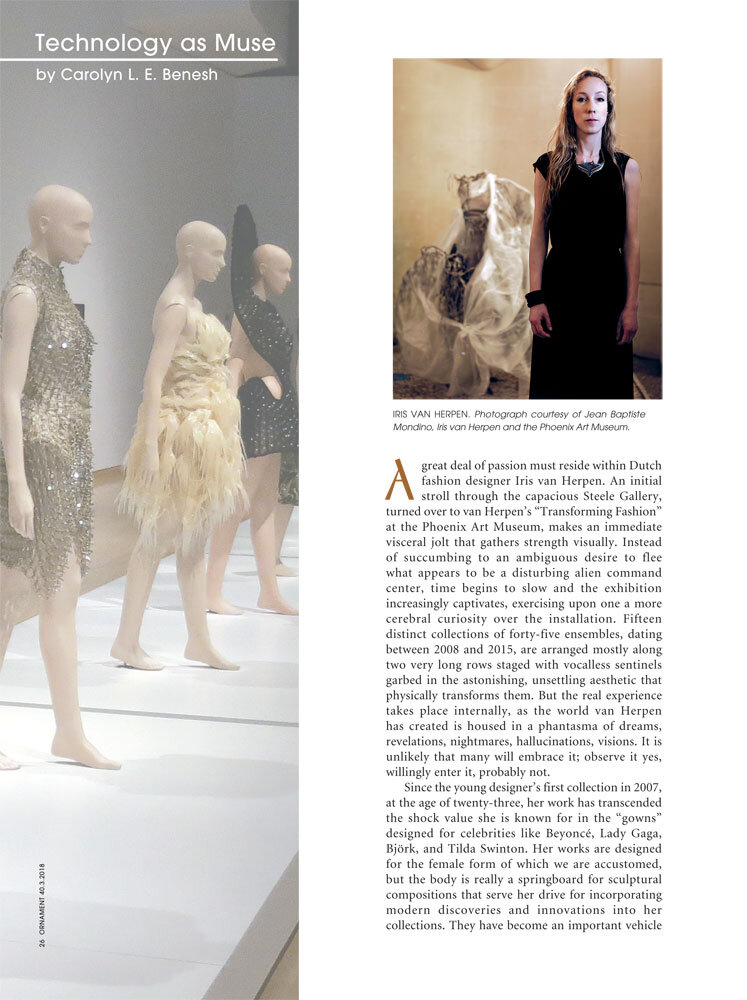
A great deal of passion must reside within Dutch fashion designer Iris van Herpen. An initial stroll through the capacious Steele Gallery, turned over to van Herpen’s “Transforming Fashion” at the Phoenix Art Museum, makes an immediate visceral jolt that gathers strength visually. Instead of succumbing to an ambiguous desire to flee what appears to be a disturbing alien command center, time begins to slow and the exhibition increasingly captivates, exercising upon one a more cerebral curiosity over the installation.

An unassuming storefront along Los Angeles’s bustling West Third Street is a creative way-station for those in the know. Freehand Gallery has been in business since 1980, the carefully stewarded brainchild of Carol Sauvion. Its longevity is a remarkable tribute to the enduring power of craft as an aesthetic and cultural force.
From April 21 through June 2, 2018, this year’s annual jewelry show, entitled “Back Again, Forever,” focused on the way jewelry evokes memories, even imagined ones, of times long past, inducing reflection on possibilities yet to come.

Glen R. Brown writes about Chunghie Lee’s adaptation of traditional Korean patchwork cloth or bojagi into dynamic clothing and adornment. Made in the past by nameless Korean women, recycling squares of fabric into wrappings, she honors their sense of design and color with her wearable art, which move with graceful motion when worn, yet function as sculpture when hung.

Robin Updike compares her impression of the 2016 Smithsonian Craft Show to her own experiences at a 1970s southern California craft show, her first exposure to handmade crafts. She interviews with insight a number of the participating artists. Her text is richly accompanied by images of this year’s crafts in many categories and media.

Ashley Callahan chronicles the career of Kate Rothra Fleming, who grew up with ardent naturalist parents who encouraged her study of art. After a short stint as an art teacher, she joined the Peace Corps, teaching art, math and English in Botswana. Eventually she took up flameworking; largely self-trained, she did study with Robert Ebendorf, Robert Mickelsen and Loren Stump. Living now in South Carolina and Costa Rica, her jewelry is still very much influenced by nature.

Kimberly Chrisman-Campbell reviews the enamel ornaments collected by Bernard N. Jazzar and Harold B. Nelson, the subject of a book and traveling exhibition. Established scholars of art history, Jazzar and Nelson began collecting enamel about twenty years ago and their shared passion has led to formation of the Enamel Arts Foundation.

An astonishing reminder of the complicated attraction of the feather for personal adornment is “Royal Hawaiian Featherwork: Na Hulu Ali’i,” the first major exhibition of Hawaiian featherwork in the continental United States. The exhibition time line stretches from the arrival of European explorers, unification of the islands in 1810, the Kamehameha dynasty, the conversion to Christianity after the arrival of missionaries, the overthrow of the Hawaiian government in 1893, its annexation by the United States in 1898, and to sovereignty protests by Hawaiians.

The late Ramona Solberg’s found object style of jewelry continues to influence the work of Northwest jewelers Laurie Hall, Ron Ho, Kiff Slemmons, Nancy Worden, and others (Brown 2014; Updike 2001, 2006). Warm and effusive when speaking about the work of her peers, Solberg called herself the Henry Ford of jewelry, and rightly so (Benesh 1989, 2001; Liu 1995). An inveterate traveler and lover of the material culture of the many countries she visited, Solberg often combined her metalwork with beads, which she collected on her trips, and was responsible for two of the best bead jewelry exhibitions (1988, 1998) held in the United States, at the Bellevue Art Museum.

“Fashion Victims: The Pleasures and Perils of Dress” was an exhibition of fashion objects from the nineteenth century that demonstrates how fashion seduces while ignoring the potential harm to both wearer and maker.
Dr. Alison Matthews David (School of Fashion, Ryerson) approached her friend and colleague Elizabeth Semmelhack (Senior Curator, Bata Shoe Museum) with the idea of researching an exhibition that could be a companion to her forthcoming book, Fashion Victims: The Dangers of Dress Past and Present (Bloomsbury, September 2015). They received an SSHRC grant (Canadian Social Sciences and Humanities Research Council) to fund research on issues related to toxic chemicals and the impact on makers and wearers, as well as issues of constriction within fashion. Their research took them to England and Paris, to medical libraries and chemistry labs.

Only recently did I meet two remarkable Santa Fean jewelrymakers, Hal and Margie Hiestand, whose life reads like an adventure tale. Morocco was their start in the late 1960s, from where they bought and sold to Europe and the United States, to stores like Arrowsmith in the 1970s. They have lived in Mexico and Central America, often leading a nautical existence on their sailboat. In 1982 they moved to Santa Fe, hiring four Chihuahuans to build their iconic and energy-efficient adobe house for the next fourteen months.
Starting out by stringing necklaces, they learned metalsmithing from Tuaregs, also partly through Hal’s repair of antique pieces.
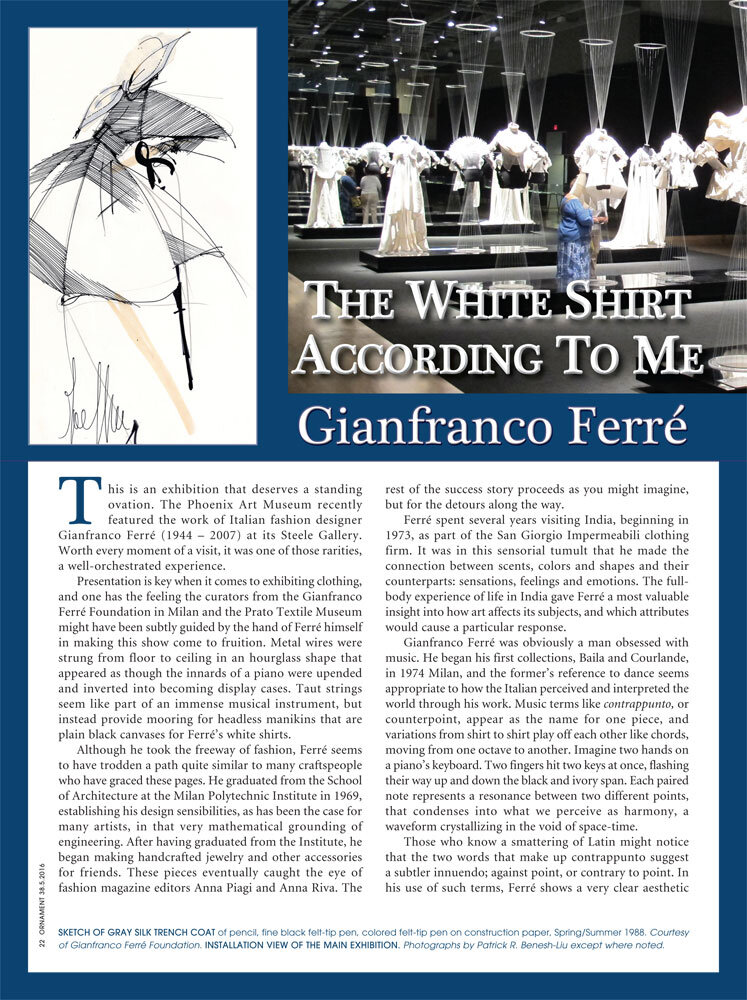
This is an exhibition that deserves a standing ovation. The Phoenix Art Museum recently featured the work of Italian fashion designer Gianfranco Ferré (1944 – 2007) at its Steele Gallery. Worth every moment of a visit, it was one of those rarities, a well-orchestrated experience.

Glass slippers. Red riding hoods. Golden locks. Fashion has always played a central role in fairy tales, symbolizing transformation, vanity or power. And throughout history, these stories have inspired artists and designers to create capes, shoes and ballgowns worthy of the fairest of them all. The Museum at the Fashion Institute of Technology’s recent exhibition “Fairy Tale Fashion” displayed more than eighty enchanting objects in a magically decorated gallery dominated by a central castle.

A recent exhibition on African textiles at the Los Angeles County Museum of Art gives us a glimpse into cultures that Western civilization has long deemed “exotic.”

Patrick R. Benesh-Liu finds in the front window of the Craft and Folk Art Museum a spiritual compatriot to Koos Van Den Akker. Shoemaker Chris Francis has worn many hats in his life, but the path he now treads brings him an unparalleled canvas for creativity and contemplation of the human condition.

Glen R. Brown investigates mixed-media jeweler Susie Ganch’s series in the context of a larger trajectory. Tying in Ganch’s introspective musings, her interest in sustainable, ethically-sourced jewelry materials, and her current and future journey, Brown gives us insight into the particulars behind her work.
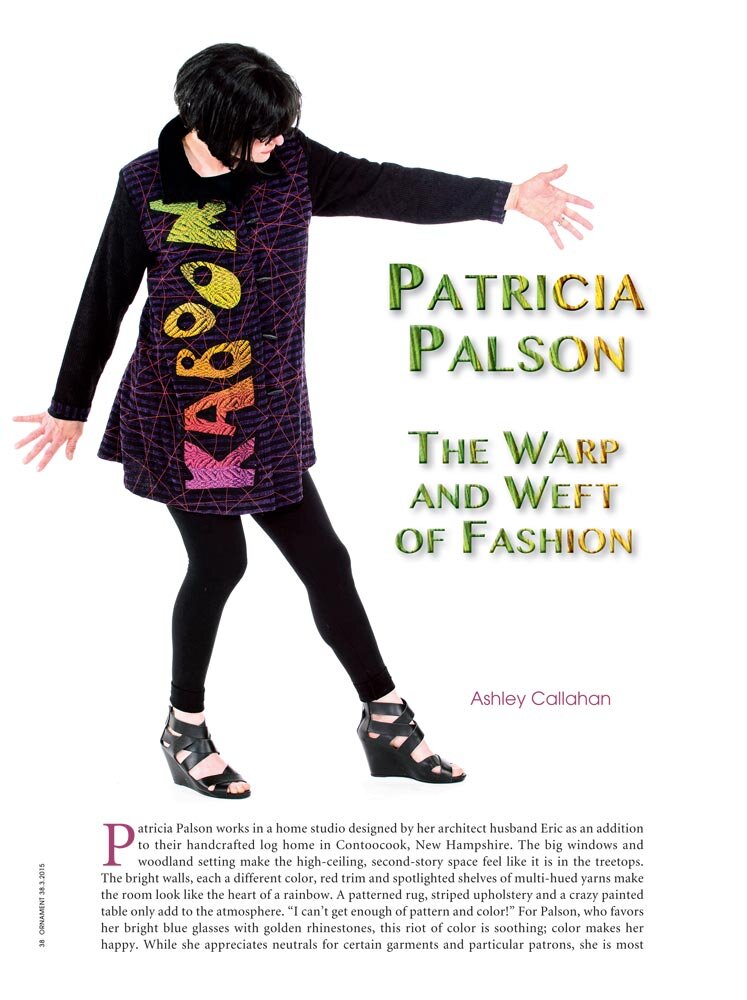
Ashley Callahan takes a dive into the technicolor world of weaver and clothing designer Patricia Palson. From her vibrantly-hued workshop Palson involves herself in every step of the creative process, from making the textiles to deciding on the cut and fit of a dress or jacket. Weaving is her DNA, and from her rigorous play develops lustrous fabric.

Robin Updike shows that plastic and paper means more than just bag materials in Jennifer Merchant’s mesmerizing mixed-media jewelry. Her use of acrylic was derived from necessity, but the marriage of graphics and transparency found in Merchant’s work is a perfect match.

Carolyn L. E. Benesh ruminates judiciously over the panoply of craft artists who make up the Philadelphia Museum of Art Contemporary Craft Show. With a careful eye, she provides a vignette of makers in all different mediums. In doing so, she draws attention to the person behind the art, and celebrates how they, as individuals, contribute creatively to our world.

The Saul Bell Design Award is one of the few jewelry and functional object competitions that are both prominent and on a national level. By having jewelers push their boundaries, the contest results in some remarkable work.

Pat Tseng and her silk knotwork, pendant-festooned jewelry is a masterpiece of minimal design, but such seeming simplicity is built upon meticulous work behind the scenes.
A very interesting project recently emerged as the Racine, a major holder of the S.C. Johnson collection, made the decision to honor an exhibition sponsored by the Johnson company (maker of Johnson’s Wax among other products), and its accompanying publication from fifty years ago. “Objects Redux,” a series of three presentations in the museum’s galleries, showed works from the original “Objects: USA” that have been integrated into RAM’s permanent collection, among others that predate and postdate the show.